Characteristics
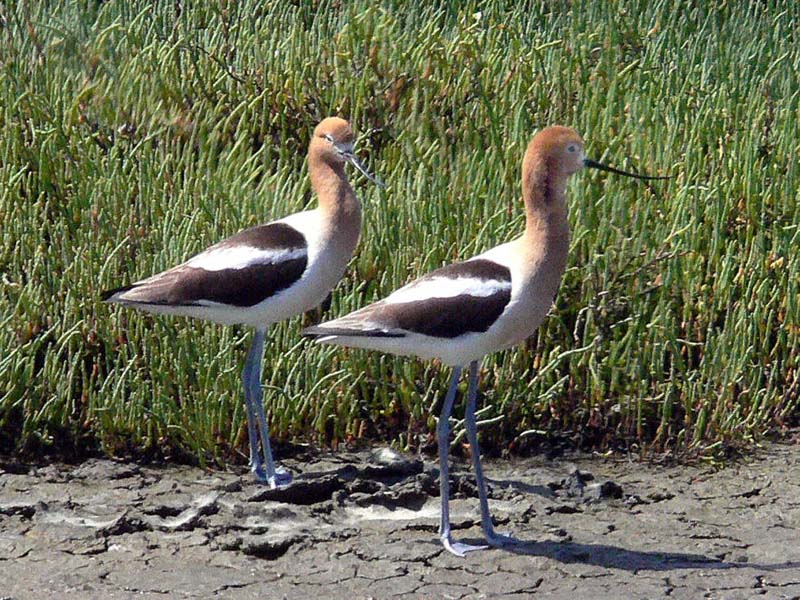
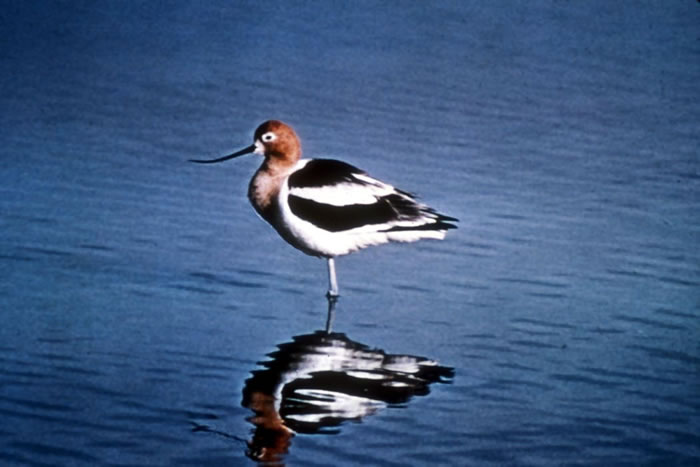
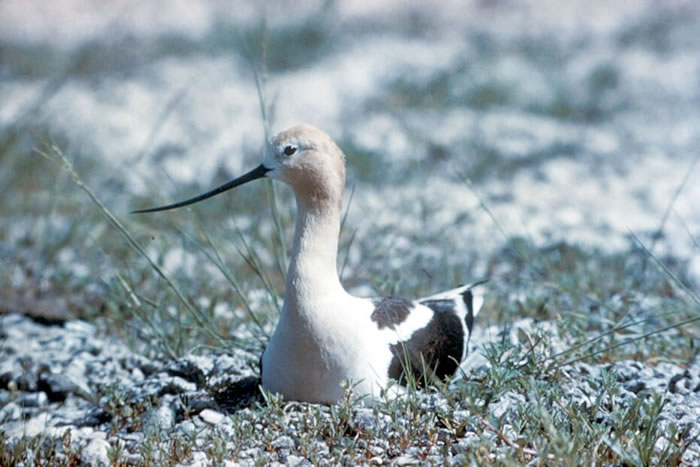
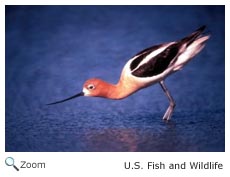 The American avocet is a large shorebird. It is 16-20 inches tall and has very long, grayish-blue legs; a long neck; and a long, turned-up black bill. The female's bill turns up a little more than the male's bill. Its head and neck are rusty-red in the summer and grayish-white in the winter. It has black wings with white stripes and a white body. The American avocet is a large shorebird. It is 16-20 inches tall and has very long, grayish-blue legs; a long neck; and a long, turned-up black bill. The female's bill turns up a little more than the male's bill. Its head and neck are rusty-red in the summer and grayish-white in the winter. It has black wings with white stripes and a white body.
Range
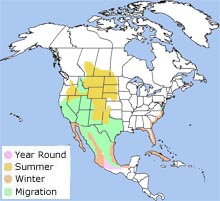 The avocet's breeding range stretches from Washington; Manitoba, Canada; and Minnesota; south to California and Texas. It winters in California, Texas, the Gulf Coast, the Southeast coast of the U.S., and Mexico. The avocet's breeding range stretches from Washington; Manitoba, Canada; and Minnesota; south to California and Texas. It winters in California, Texas, the Gulf Coast, the Southeast coast of the U.S., and Mexico.
Habitat
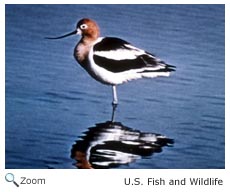 The avocet lives in freshwater marshes and shallow marshy lakes. It breeds in salt or brackish marshes. It may move to coastal areas in the winter. The avocet lives in freshwater marshes and shallow marshy lakes. It breeds in salt or brackish marshes. It may move to coastal areas in the winter.
Diet
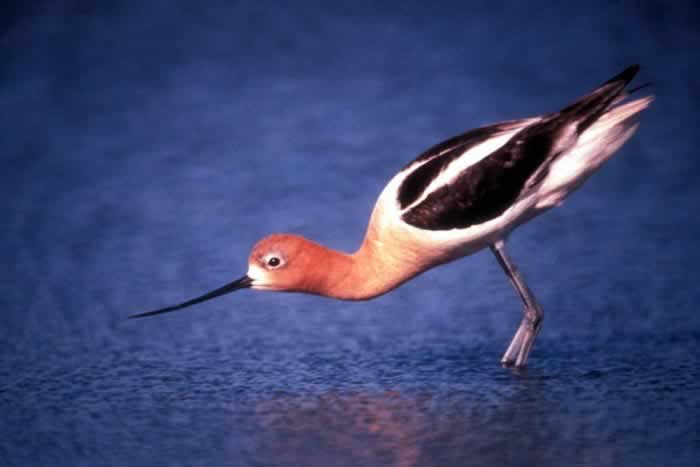
The avocet moves its bill back and forth on the surface of the water to stir up insects, crustaceans, and other food. It then scoops the food up in its bill. It also eats seeds and aquatic plants that are on the surface of the water. |
|
|
Life Cycle
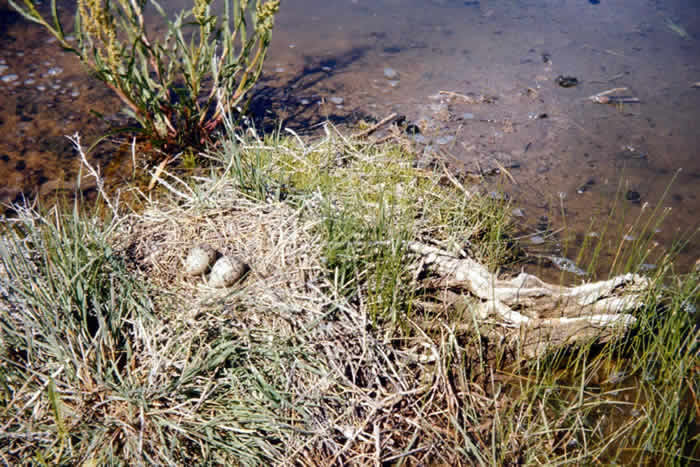
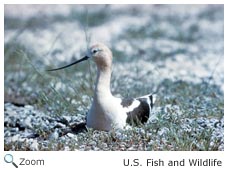 Female avocets lay three to four eggs in a shallow depression lined with grass on the beach or a mudflat. Avocets occasionally nest in colonies. Both the male and the female incubate the eggs and care for the chicks. Avocets can be very aggressive towards intruders while they are nesting. They make loud noises and even dive at intruders to drive them away from the nest! Female avocets lay three to four eggs in a shallow depression lined with grass on the beach or a mudflat. Avocets occasionally nest in colonies. Both the male and the female incubate the eggs and care for the chicks. Avocets can be very aggressive towards intruders while they are nesting. They make loud noises and even dive at intruders to drive them away from the nest!
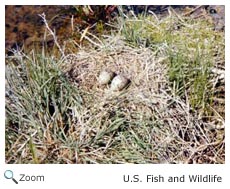 It takes about three to four weeks for the chicks to hatch. The chicks are precocial. Precocial birds can move around soon after they are born. American avocet chicks can swim and feed themselves soon after they are born, but they won't fly until they are about a month old. It takes about three to four weeks for the chicks to hatch. The chicks are precocial. Precocial birds can move around soon after they are born. American avocet chicks can swim and feed themselves soon after they are born, but they won't fly until they are about a month old.
Behavior
Avocets are short-distance migrators. When they migrate south every fall, some individuals stray off the migratory path and end up on the Atlantic Coast.
|