Characteristics
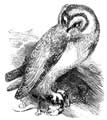
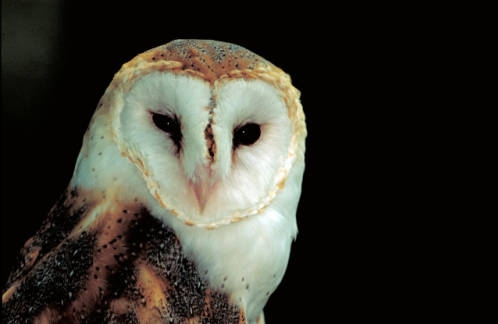
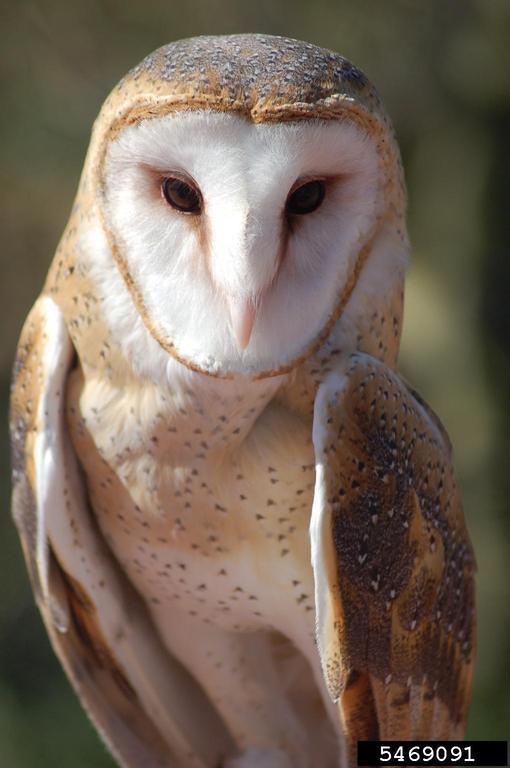
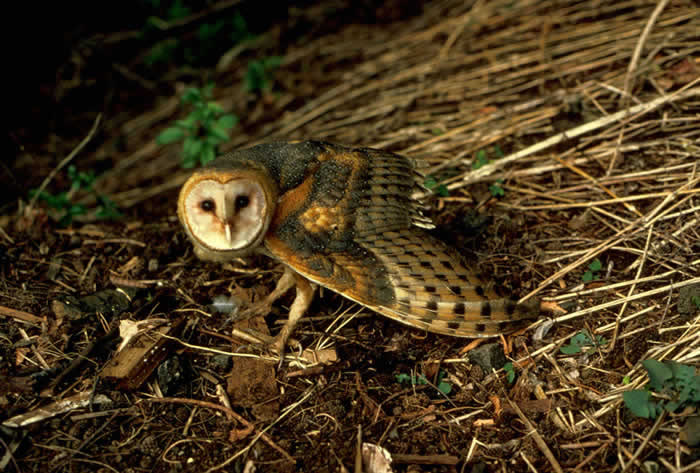
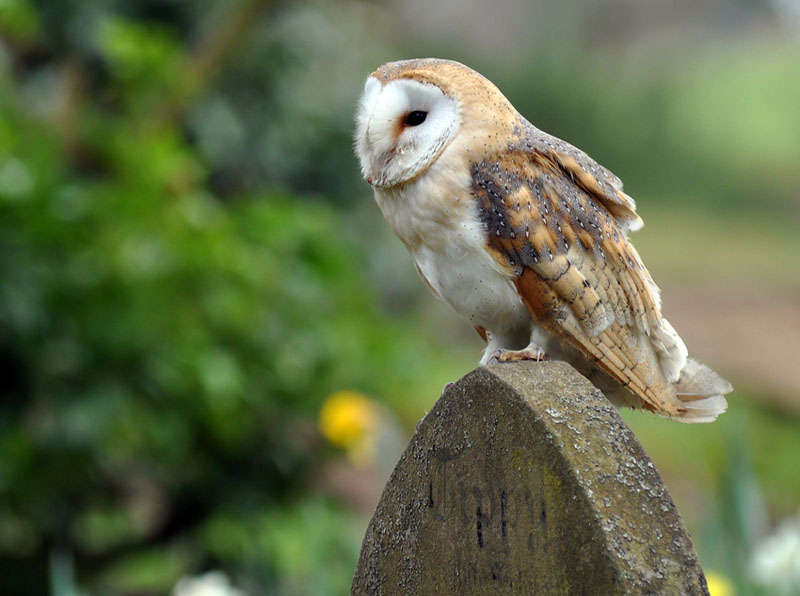
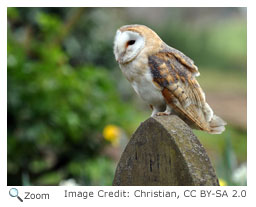
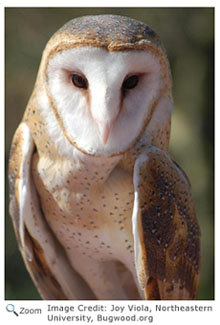 The barn owl is 14-20 inches in length and has a wingspan of close to four feet. It is golden-brown on its uppersides and grayish-white on its chest and belly. It has dark specks on both its underside and upperside. It has a heart-shaped white face with a ring of brown feathers around it. Its wings are rounded, and it has a short tail and long legs. It doesn't hoot like other owls, instead it makes a raspy hissing or shrieking sound. The barn owl is sometimes called the monkey-faced owl. The barn owl is 14-20 inches in length and has a wingspan of close to four feet. It is golden-brown on its uppersides and grayish-white on its chest and belly. It has dark specks on both its underside and upperside. It has a heart-shaped white face with a ring of brown feathers around it. Its wings are rounded, and it has a short tail and long legs. It doesn't hoot like other owls, instead it makes a raspy hissing or shrieking sound. The barn owl is sometimes called the monkey-faced owl.
Range
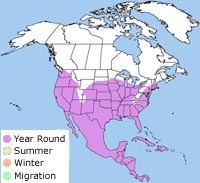 The barn owl is found from British Columbia , North Dakota, Michigan, and southern New England south to South America. It is also found in Europe, Africa, Australia, and Asia. The barn owl is found from British Columbia , North Dakota, Michigan, and southern New England south to South America. It is also found in Europe, Africa, Australia, and Asia.
Habitat
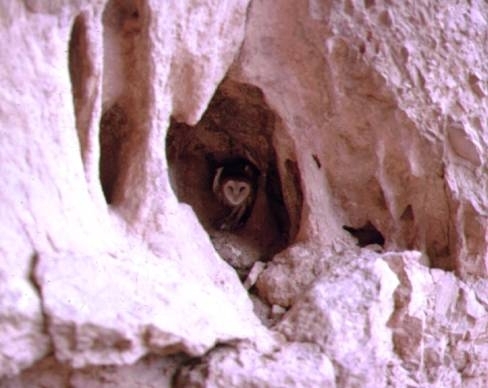
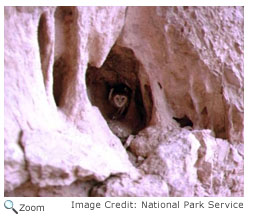 The barn owl lives in open areas, forest edges, and clearings, farmland, and cities. It needs areas with open land for hunting. The barn owl is often found roosting in tree cavities, crevices in cliffs, or in riverbanks. It also roosts in buildings like barns. The barn owl lives in open areas, forest edges, and clearings, farmland, and cities. It needs areas with open land for hunting. The barn owl is often found roosting in tree cavities, crevices in cliffs, or in riverbanks. It also roosts in buildings like barns.
|
|
|
Diet
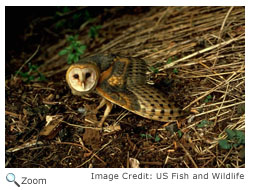 The barn owl is a nocturnal hunter. It eats small mammals like mice, shrews, voles, and rats. It also eats birds. It has a keen sense of smell, which along with the ability to see in low light, helps it catch its prey. Its soft feathers also muffle sound so it can silently sneak up on its prey. The barn owl is a nocturnal hunter. It eats small mammals like mice, shrews, voles, and rats. It also eats birds. It has a keen sense of smell, which along with the ability to see in low light, helps it catch its prey. Its soft feathers also muffle sound so it can silently sneak up on its prey.
Life Cycle
 Males attract a mate with calls. They then chase the female. Both the male and female will then let out a series of screeching calls. Males attract a mate with calls. They then chase the female. Both the male and female will then let out a series of screeching calls.
The female barn owl lays five to ten eggs at a rate of one egg every two to three days. She lays her eggs on bare wood or stone in buildings, tree hollows, caves, or burrows. The owlets hatch in 32-34 days, and both parents feed them. The owlets hunt on their own when they are about two months old. Because the barn owl has a life expectancy of only about two years, females often have two broods a year.
Behavior
When a barn owl is threatened, it spreads its wings and sways its head back and forth. It may also fall on its back and strike out at the threat with its feet. |