Diet
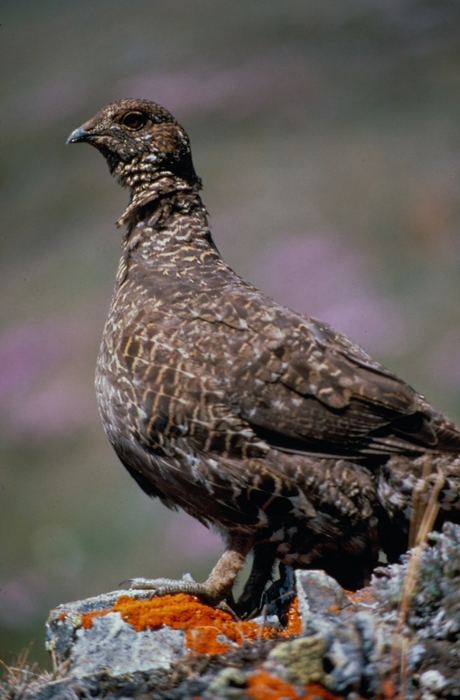
In warm months, the sooty grouse eats seeds, berries, and insects. In the winter, the sooty grouse eats conifer needles. Some sooty grouse are short distance migrators and, depending on where the food is, travel to either higher or lower elevations.
Life Cycle
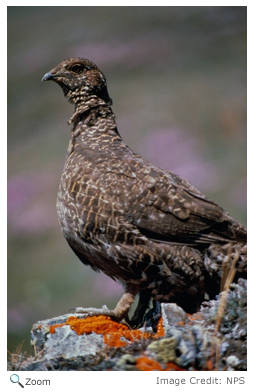 The female sooty grouse lays 5-10 eggs in a scrape lined with pine needles and grass. The nest is usually hidden under a bush, log, rocky overhang, or small tree. The female incubates the eggs and cares for the chicks. The chicks hatch after 25 days and soon begin foraging for food. They fledge in seven to ten days.
Behavior
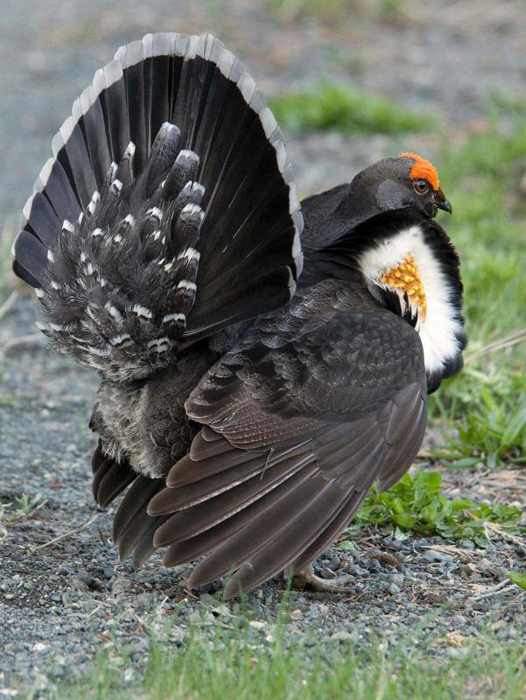
During mating season, the male sooty grouse often perches on a log or post and calls out with a loud booming hoot that can be heard for miles. The comb over his eyes stands up, and he fans out his tail and puffs out his neck to display his neck sac.


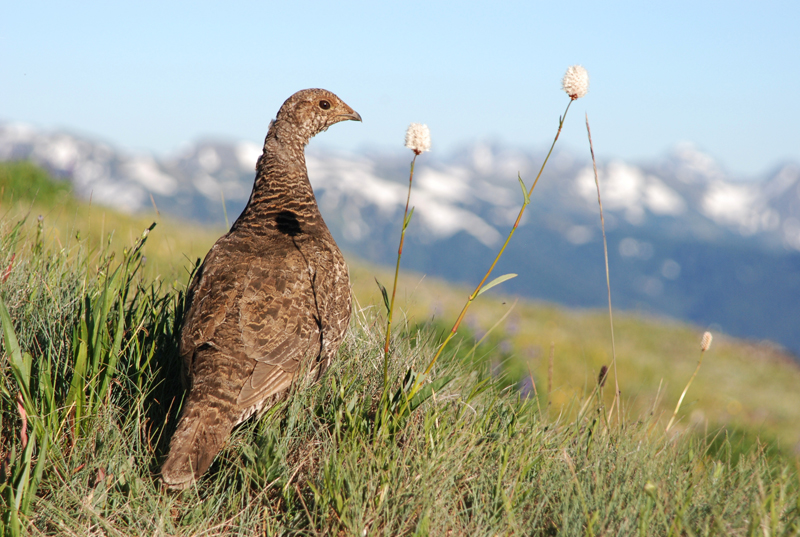


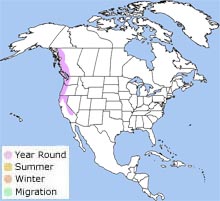 The sooty grouse is found from British Columbia south to California. The sooty grouse was the blue grouse until 2006 when the blue grouse was split into two species, the sooty grouse and the dusky grouse. The dusky grouse is found in the Rocky Mountains, from the southern Yukon and northern British Columbia , south into northern Arizona and western New Mexico.