Characteristics
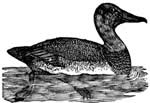
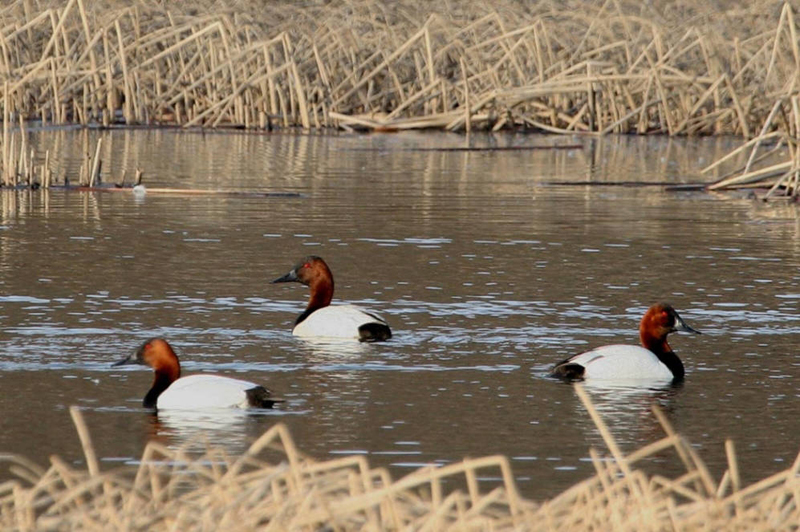
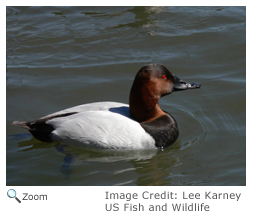 The canvasback is a diving duck that is found only in North America. It is 13-19 inches in length with a wingspan of 34 inches. It has a long, sloping forehead and a long, pointed black bill. The canvasback is a diving duck that is found only in North America. It is 13-19 inches in length with a wingspan of 34 inches. It has a long, sloping forehead and a long, pointed black bill.
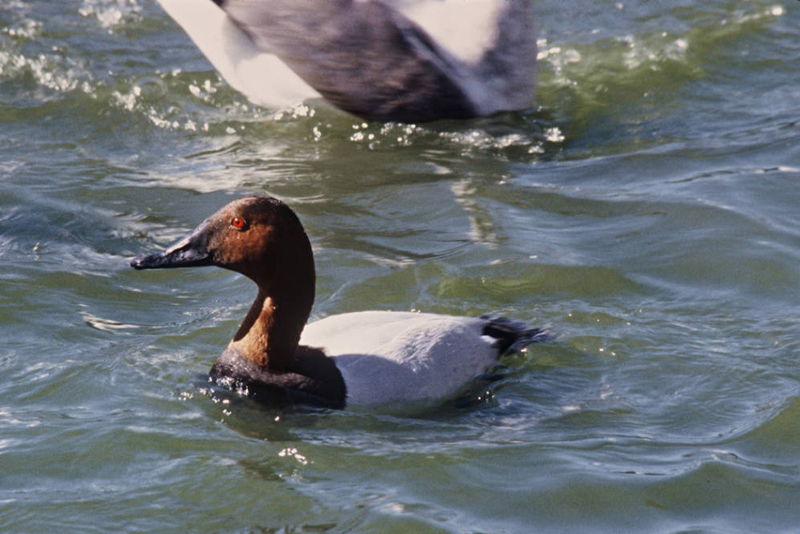
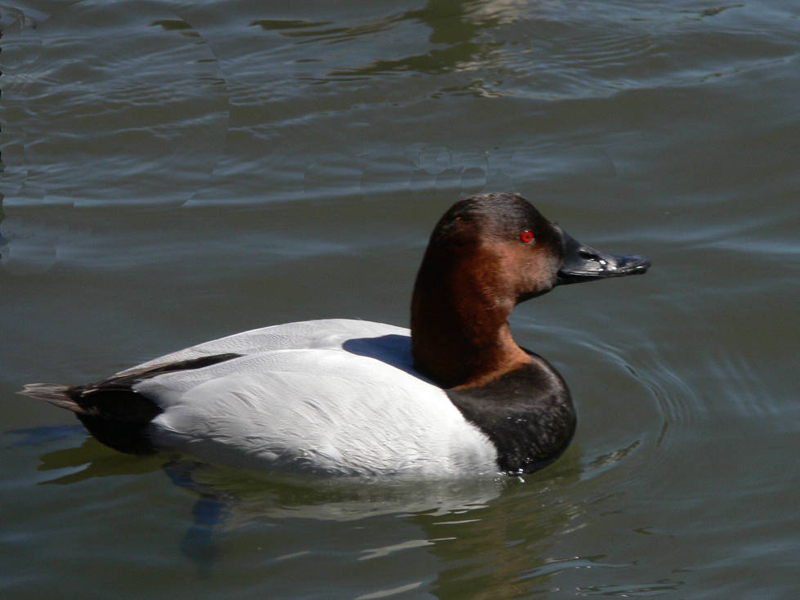
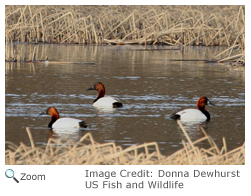
 The male has a grayish-white body, a black chest and tail, a copper colored head and neck, and red eyes.
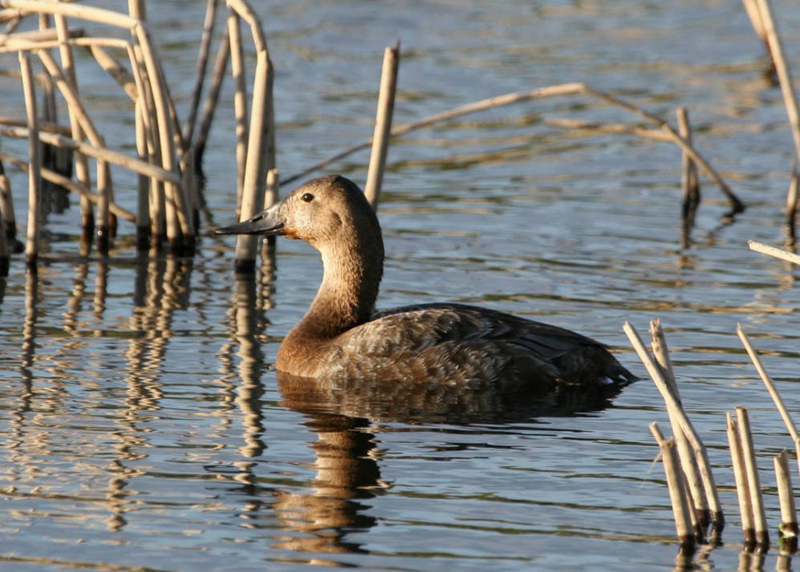
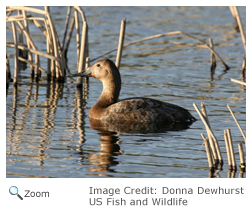
The female has a speckled gray body with a brown head and neck and brown eyes. The male has a grayish-white body, a black chest and tail, a copper colored head and neck, and red eyes.
The female has a speckled gray body with a brown head and neck and brown eyes.
Range
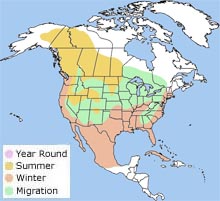 The canvasback breeds in
freshwater prairie marshes and swamps
from Alaska south and east to Nebraska and Minnesota. It winters on the the Great Lakes; on the Atlantic, Pacific and Gulf Coasts and in Mexico. The canvasback breeds in
freshwater prairie marshes and swamps
from Alaska south and east to Nebraska and Minnesota. It winters on the the Great Lakes; on the Atlantic, Pacific and Gulf Coasts and in Mexico.
Habitat
During the breeding season the canvasback can be found in marshes. It winters on lakes, bays, and estuaries. |
|
Diet
 The canvasback is a diving duck and it eats
green aquatic vegetation. One of its favorite foods is wild celery (Valisneria americana) in fact, that is where it gets its Latin name! It also eats pondweeds, water lilies, sedges, mollusks, small crustaceans, small fish
and insects. The canvasback is a diving duck and it eats
green aquatic vegetation. One of its favorite foods is wild celery (Valisneria americana) in fact, that is where it gets its Latin name! It also eats pondweeds, water lilies, sedges, mollusks, small crustaceans, small fish
and insects.
Life Cycle
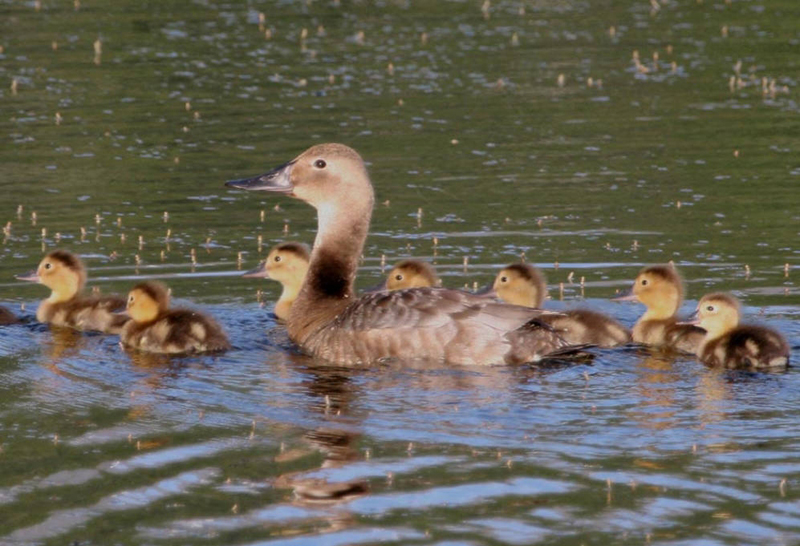
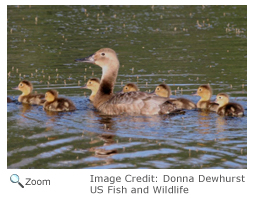 Male and female canvasbacks form mating pairs before they reach their breeding grounds. The female lays 7-10 olive-green eggs in a nest of reeds and grass lined with down. The nest is made in the marsh and is attached to dense vegetation.
The female incubates the eggs and cares for the young. The eggs hatch in about 24 days and the ducklings fledge when they are
56-70
days old. Male and female canvasbacks form mating pairs before they reach their breeding grounds. The female lays 7-10 olive-green eggs in a nest of reeds and grass lined with down. The nest is made in the marsh and is attached to dense vegetation.
The female incubates the eggs and cares for the young. The eggs hatch in about 24 days and the ducklings fledge when they are
56-70
days old.
Behavior
During the non-breeding season canvasbacks gather in large flocks or rafts on the water. The canvasback is a very good flier and can reach speeds of up to 70 mph. When they are migrating they fly in large V-shaped formations. The canvasback has to take a running start in the surface of the water before it becomes airborne.
|