Characteristics
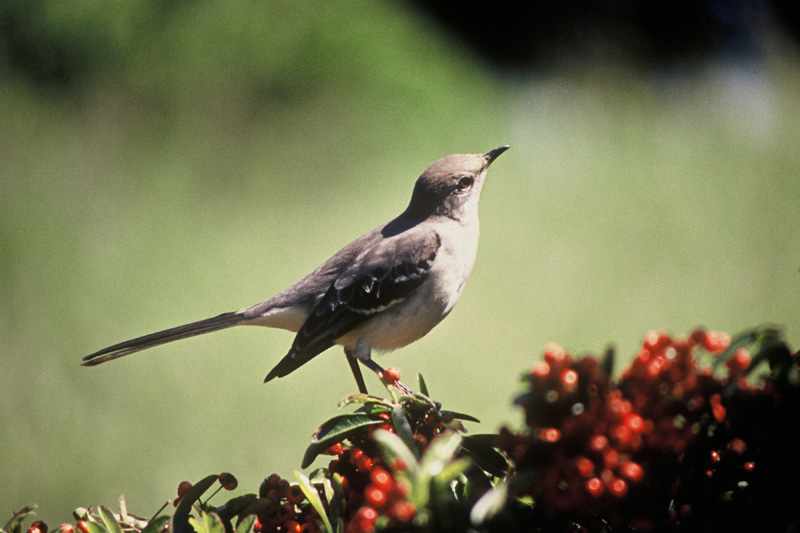
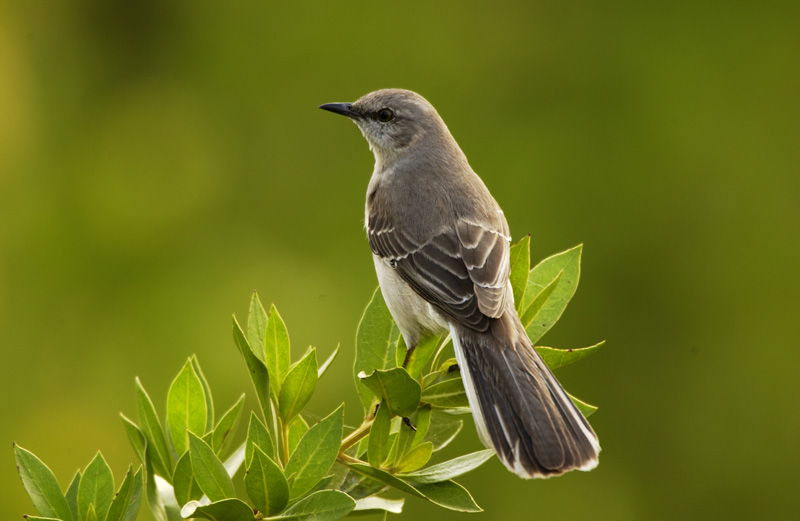
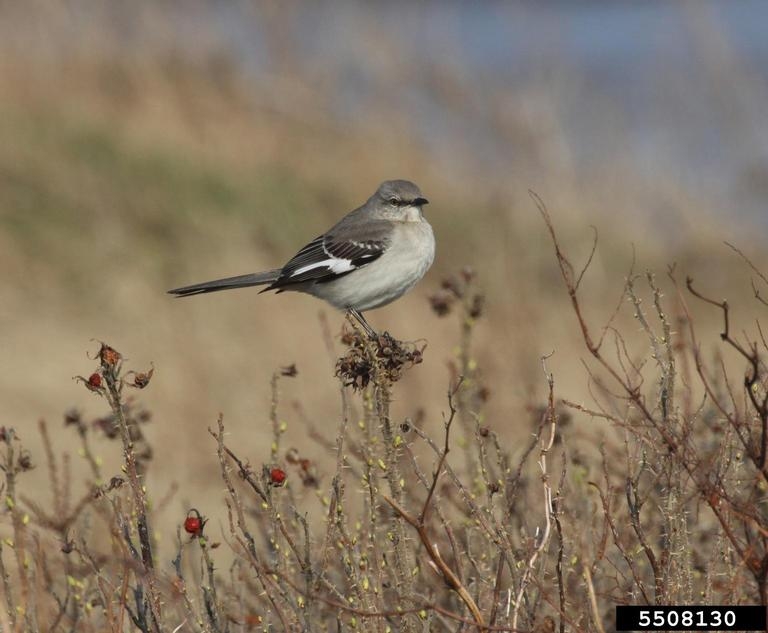
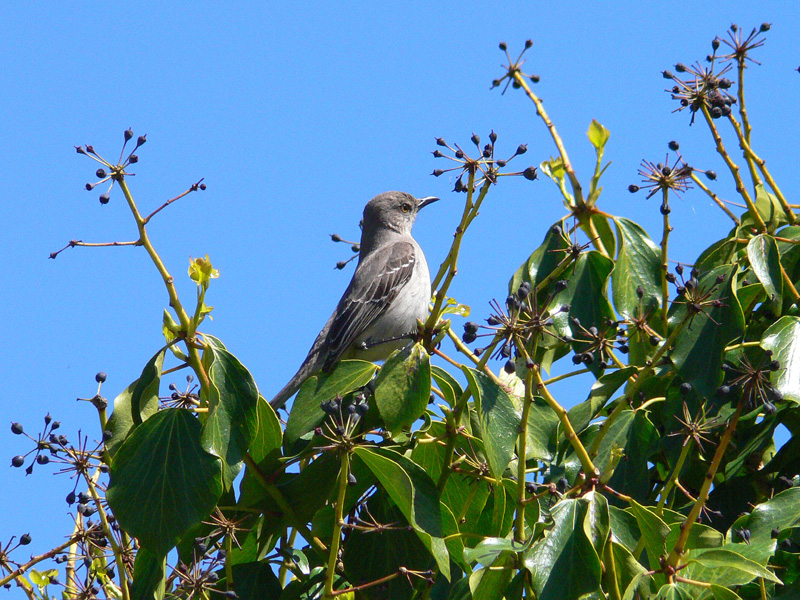
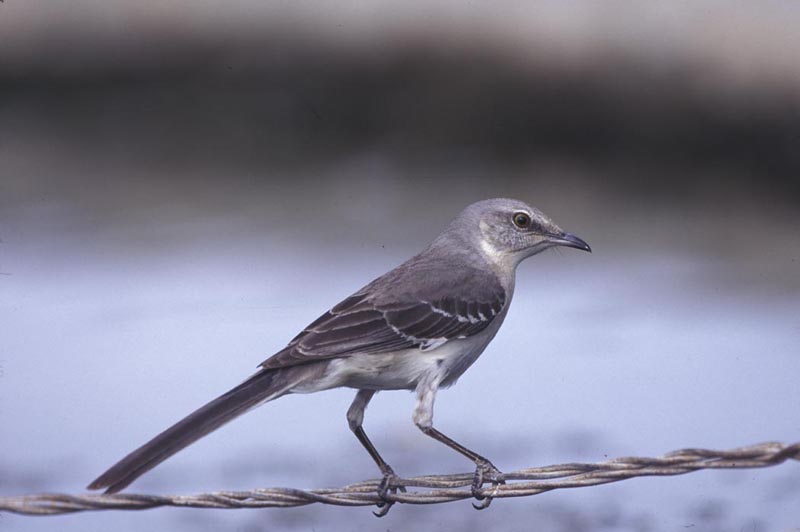
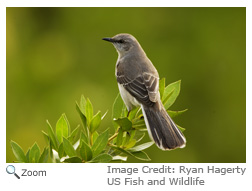 The mockingbird is gray on top and white on its underside. It has white patches on its wings that look like bars; a long black tail with white outer feathers and a long, slender bill. Males and females look alike. The mockingbird is gray on top and white on its underside. It has white patches on its wings that look like bars; a long black tail with white outer feathers and a long, slender bill. Males and females look alike.
Range
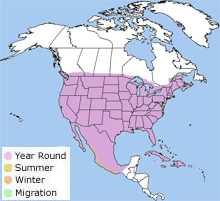 The northern mockingbird is found in most of the continental United States south to Mexico. It is also found in the Caribbean. The northern mockingbird is found in most of the continental United States south to Mexico. It is also found in the Caribbean.
Habitat
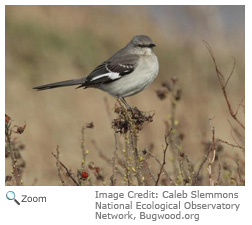 The northern mockingbird lives in open country with thickets, farmland and desert brush. The northern mockingbird lives in open country with thickets, farmland and desert brush.
|
|
Diet
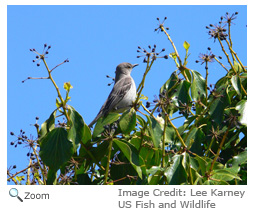 The northern mockingbird eats ants, beetles, grasshoppers, seeds and berries. The northern mockingbird eats ants, beetles, grasshoppers, seeds and berries.
Life Cycle
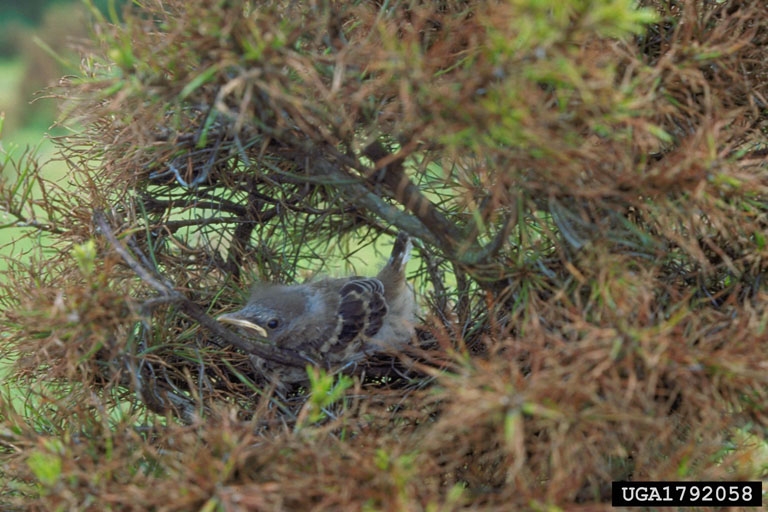
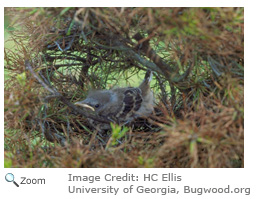 Mating season is between March and August. During mating season male mocking birds may sing night and day! Mockingbirds build cup-shaped nests in forks of trees or bushes. Both the male and female build the nest using twigs, leaves and grass. The female lays between three to five eggs. The female incubates the eggs. It takes about two weeks for the eggs to hatch. Both the female and male will take care of the fledglings. The babies leave the nest in a little over 10 days. The female usually has two broods a year, but she can have up to four. Mating season is between March and August. During mating season male mocking birds may sing night and day! Mockingbirds build cup-shaped nests in forks of trees or bushes. Both the male and female build the nest using twigs, leaves and grass. The female lays between three to five eggs. The female incubates the eggs. It takes about two weeks for the eggs to hatch. Both the female and male will take care of the fledglings. The babies leave the nest in a little over 10 days. The female usually has two broods a year, but she can have up to four.
Behavior
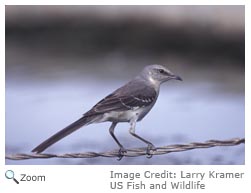 The mockingbird is very territorial. It dives and attacks intruders that come too close to its territory. It may even attack its own reflection! The mockingbird is very territorial. It dives and attacks intruders that come too close to its territory. It may even attack its own reflection!
The mockingbird was given its name because of its ability to mimic the calls of dozens of other bird species. In fact, the mockingbird's Latin name, Mimus polyglottos, means many-tongued mimic. The mockingbird has even been known to mimic the sounds of dogs and sirens! The mockingbird is especially vocal on moonlit spring nights. |