Characteristics
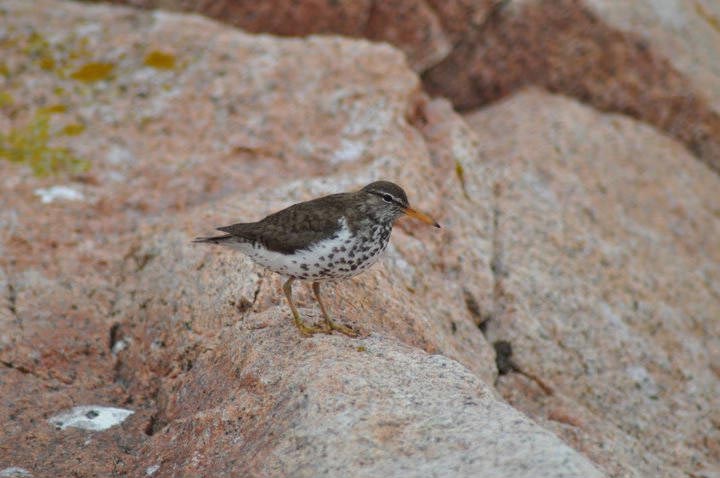
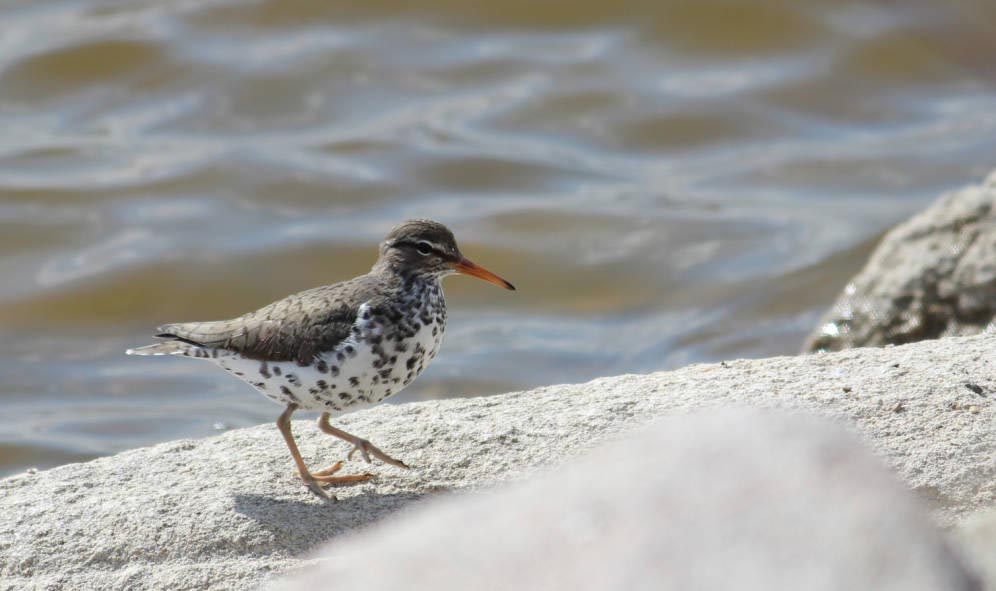
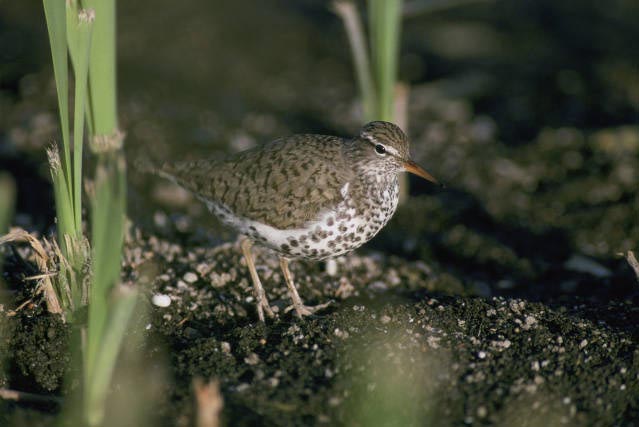
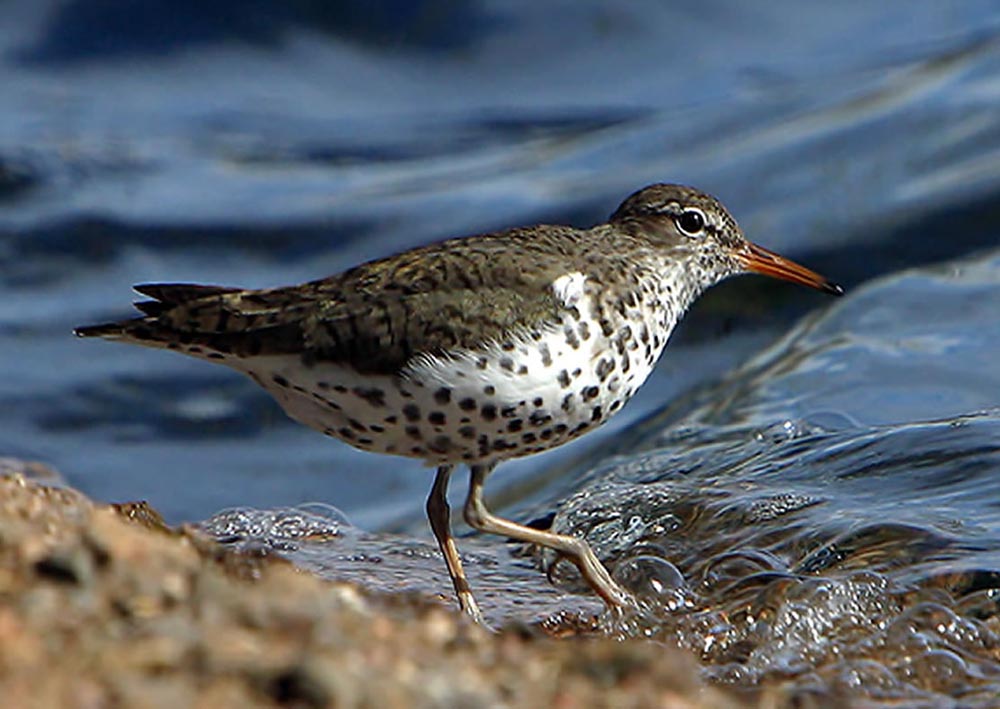
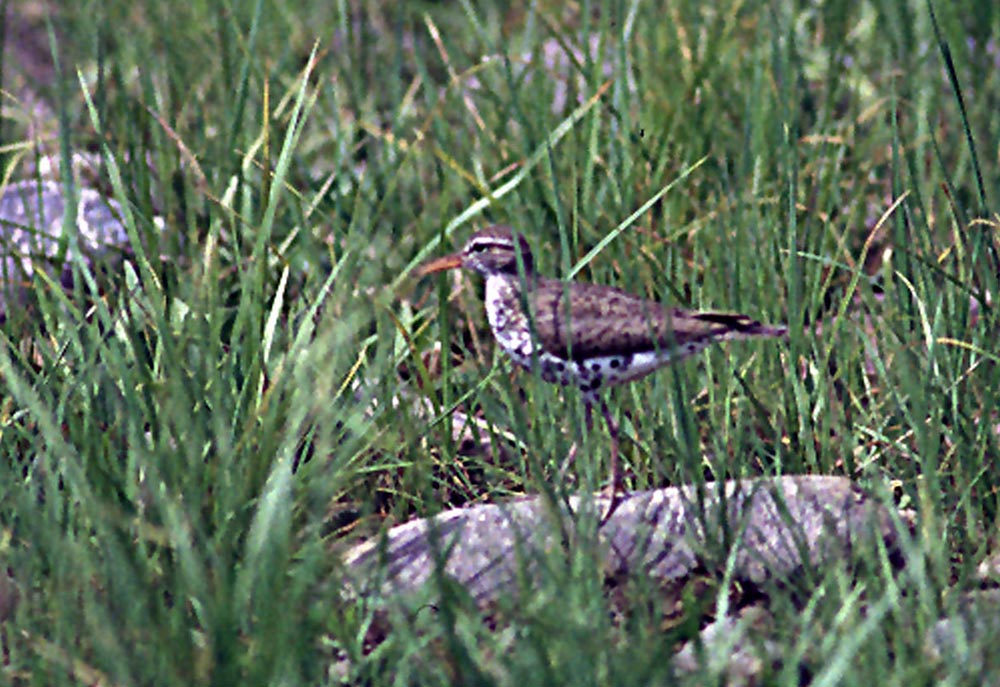
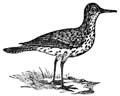
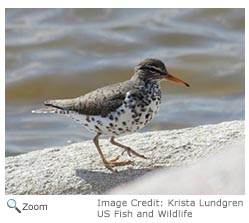 The spotted sandpiper is about six to seven inches in length. It has a white line over its eyes and long yellowish or pinkish legs.In breeding season, it is brown above and white below with dark brown spots on its chest and belly. Its bill is a bright orange with a black tip. The spotted sandpiper is about six to seven inches in length. It has a white line over its eyes and long yellowish or pinkish legs.In breeding season, it is brown above and white below with dark brown spots on its chest and belly. Its bill is a bright orange with a black tip.
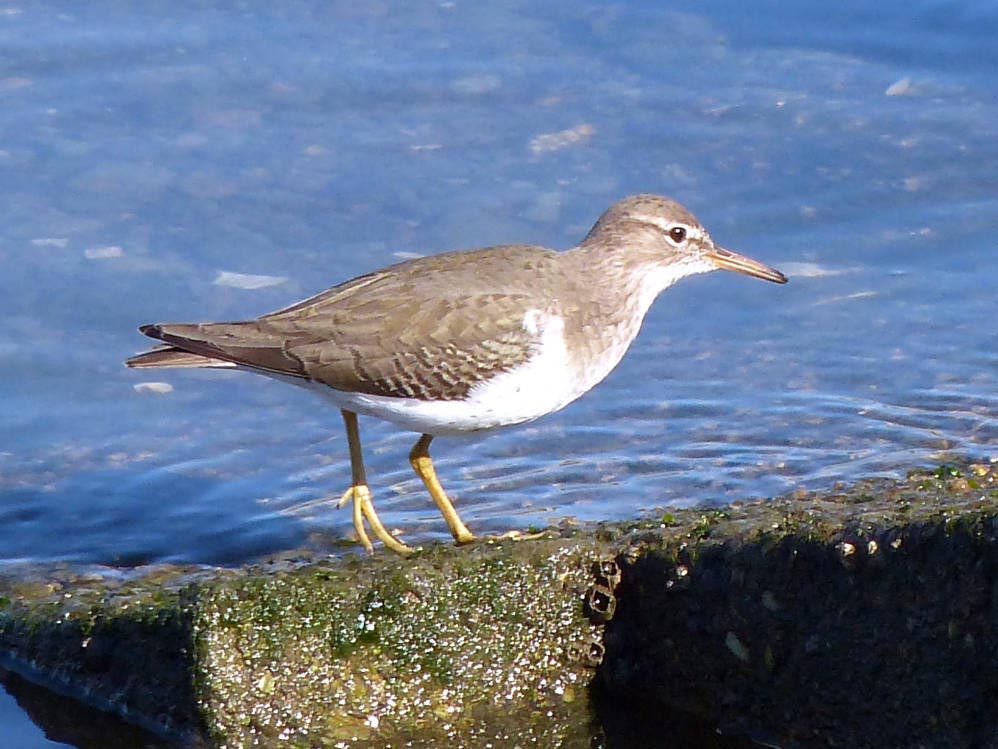
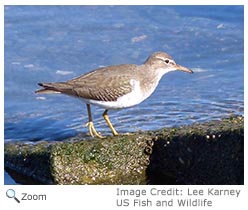 In the winter the spotted sandpiper has, a grayish-brown back and sides and a spotless white breast. Its bill is yellow with a black tip. Male and female spotted sandpipers look alike, but the female is a little larger. In the winter the spotted sandpiper has, a grayish-brown back and sides and a spotless white breast. Its bill is yellow with a black tip. Male and female spotted sandpipers look alike, but the female is a little larger.
Range
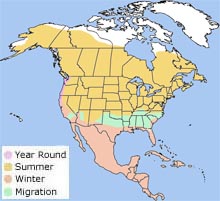 The spotted sandpiper breeds across most of Canada and the United States, including New Hampshire. It winters along the the Pacific Coast in the west. In the east, it winters along the Atlantic Coast of the southern United States south to South America. The spotted sandpiper breeds across most of Canada and the United States, including New Hampshire. It winters along the the Pacific Coast in the west. In the east, it winters along the Atlantic Coast of the southern United States south to South America.
Habitat
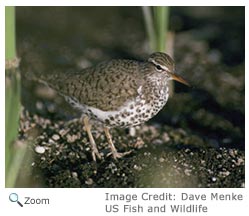 The spotted sandpiper lives on the edges freshwater sources like ponds, streams, lakes and rivers. In winter it can be found in shallow, muddy lagoons; creeks; canals and mudflats. It can also be found on beaches. The spotted sandpiper lives on the edges freshwater sources like ponds, streams, lakes and rivers. In winter it can be found in shallow, muddy lagoons; creeks; canals and mudflats. It can also be found on beaches.
|
|
Diet
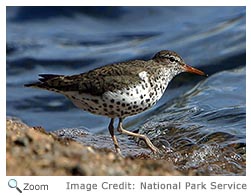 The spotted sandpiper probes for a variety of insects and other small invertebrates including fly larvae, grasshoppers, beetles, crickets, spiders, worms, crustaceans and mollusks. It may also catch insects in the air. The spotted sandpiper probes for a variety of insects and other small invertebrates including fly larvae, grasshoppers, beetles, crickets, spiders, worms, crustaceans and mollusks. It may also catch insects in the air.
Life Cycle
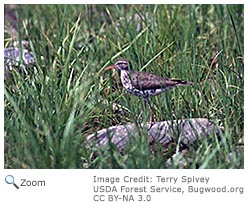 Unlike most species of birds, the female spotted sandpiper reaches the breeding range before the male and selects and defends a territory. She then tries to attract a male. Unlike most species of birds, the female spotted sandpiper reaches the breeding range before the male and selects and defends a territory. She then tries to attract a male.
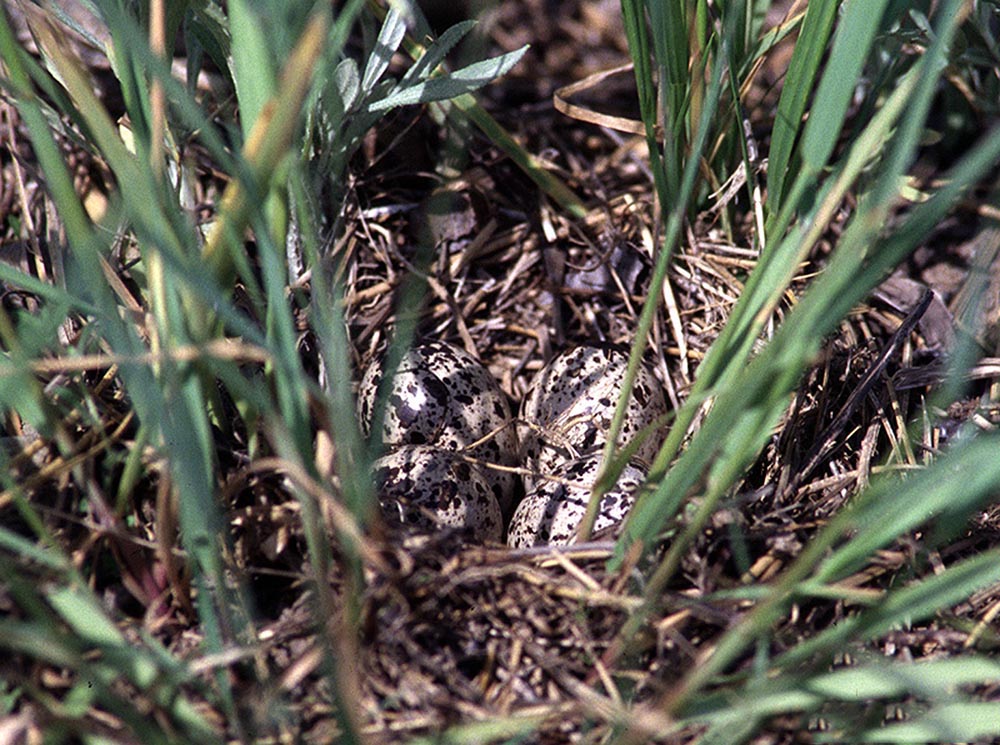
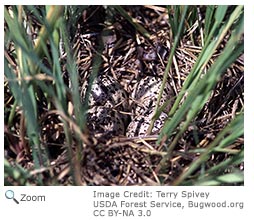 The female lays four eggs in a grass and moss-lined nest made in a depression in the ground. The female may mate with more than one male, and she may lay eggs for each of them! The female lays four eggs in a grass and moss-lined nest made in a depression in the ground. The female may mate with more than one male, and she may lay eggs for each of them!
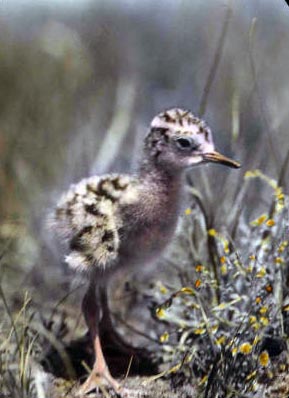
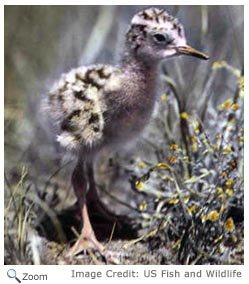 The male incubates the eggs and cares for the chicks. The chicks hatch in 20-24 days. They are precocial and leave the nest shortly after birth hopping around looking for food. They fledge when they are 17-21 days old. The male incubates the eggs and cares for the chicks. The chicks hatch in 20-24 days. They are precocial and leave the nest shortly after birth hopping around looking for food. They fledge when they are 17-21 days old.
Behavior
The spotted sandpiper is sometimes called
the "teeter-tail" because of the way it bobs its rump up and down!
|


 Characteristics