Characteristics
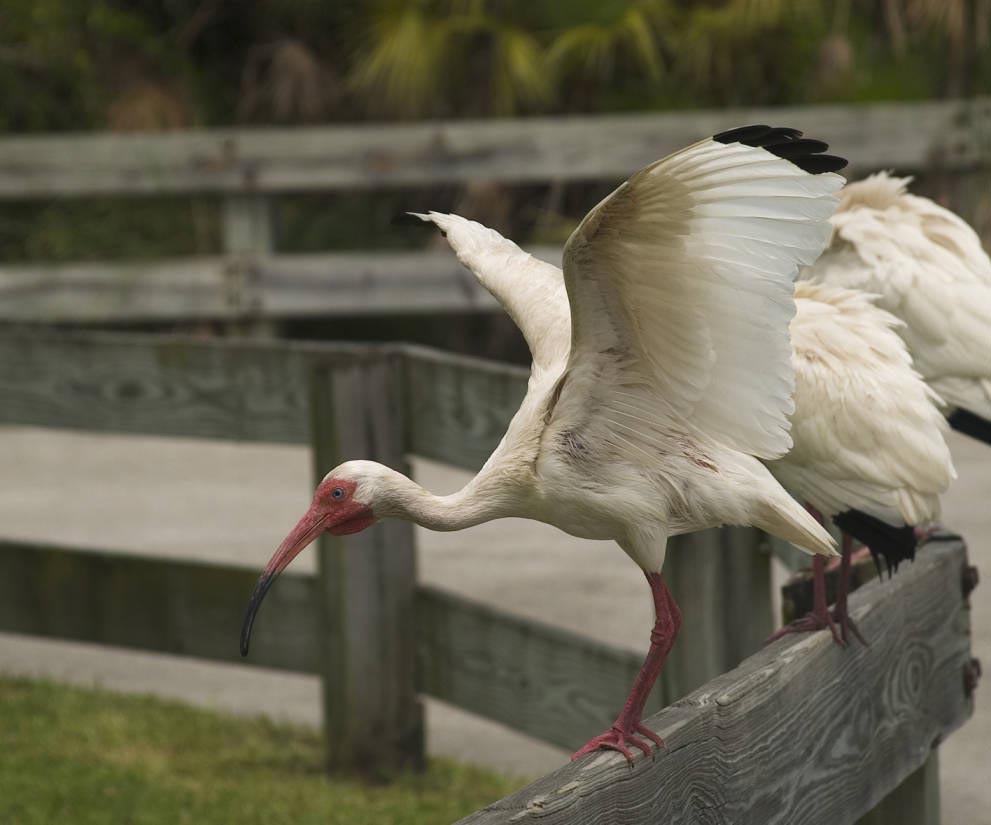
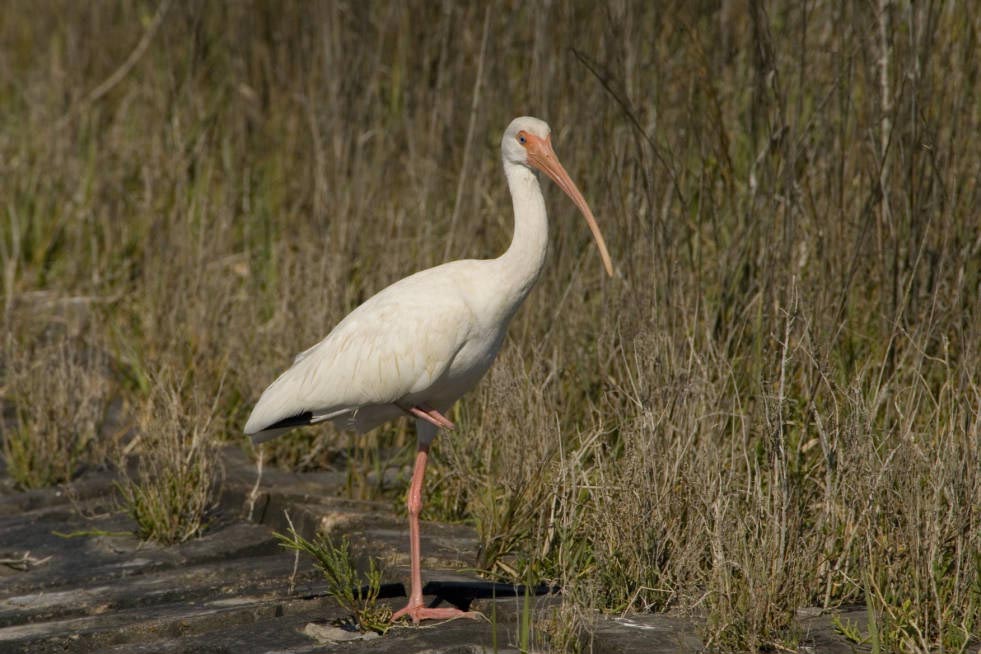
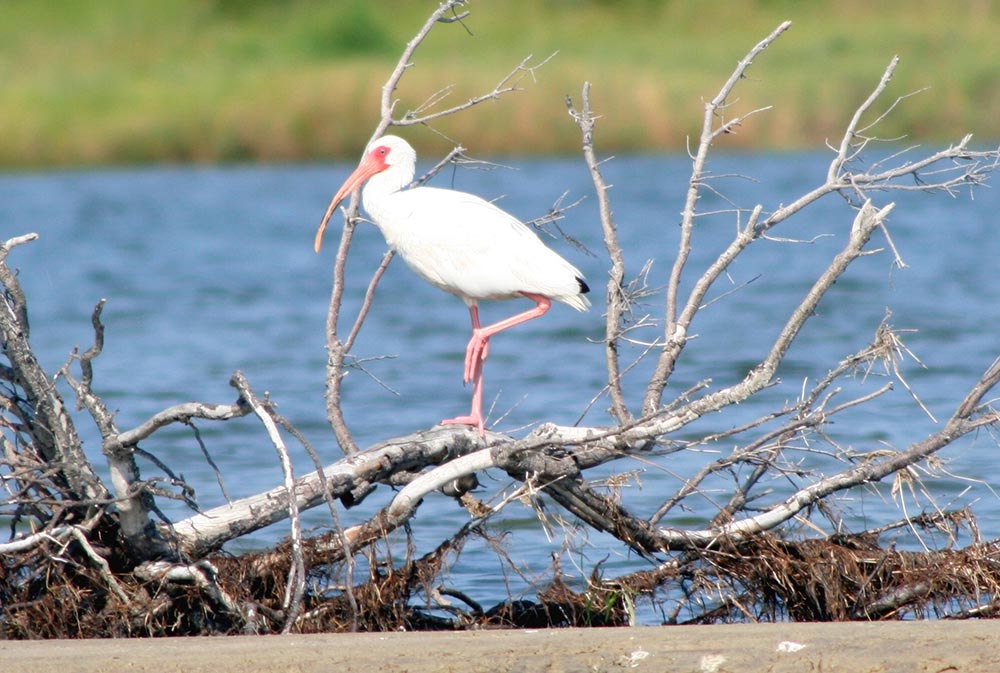
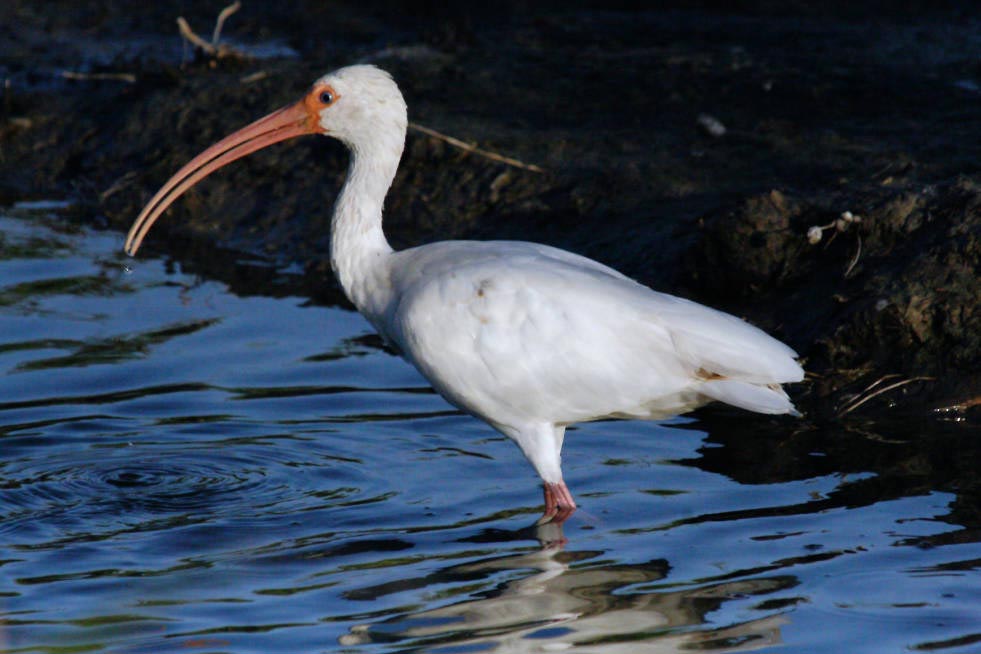
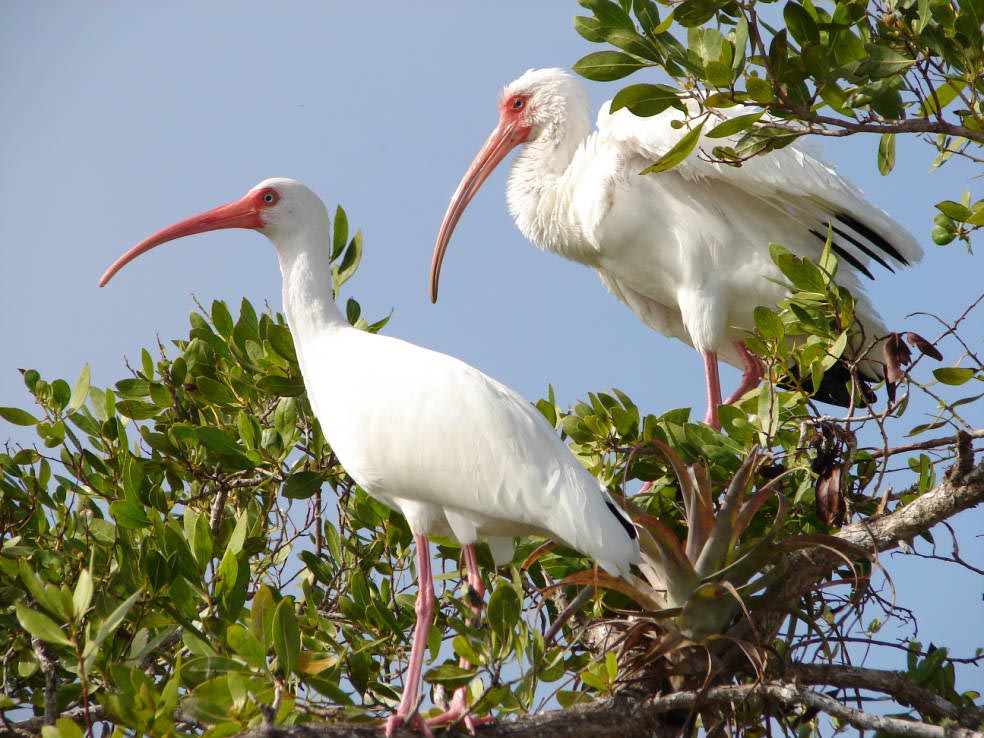
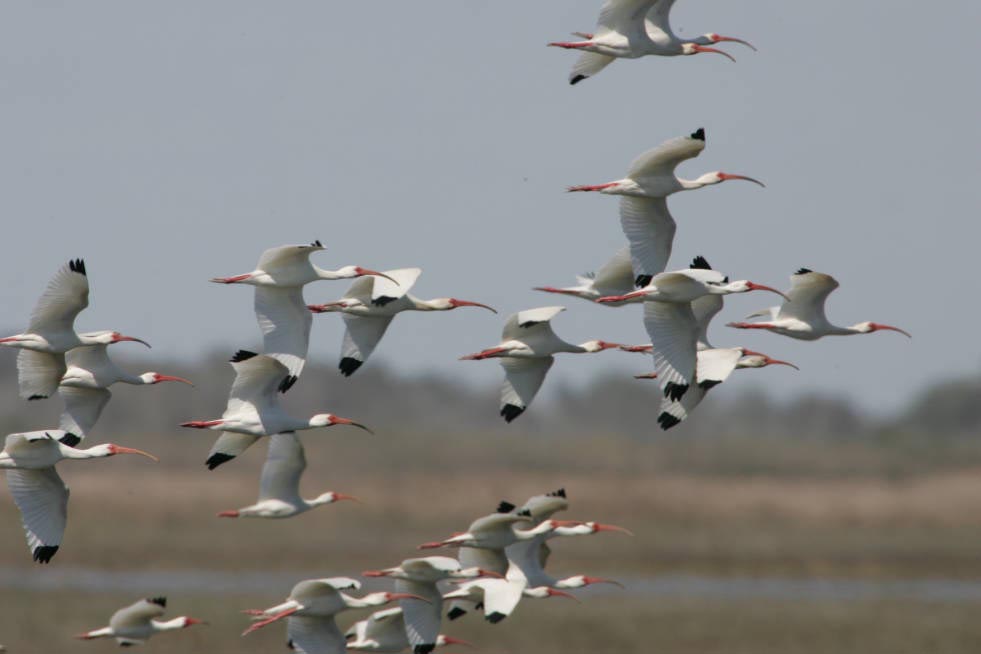
 The white ibis about 2 feet tall and has a wingspan of about 3 feet. It is entirely white, except for its black-edged wings. Its blacked tipped wings may not be noticeable when the ibis is at rest, but they are easily seen when the ibis is in flight. The white ibis about 2 feet tall and has a wingspan of about 3 feet. It is entirely white, except for its black-edged wings. Its blacked tipped wings may not be noticeable when the ibis is at rest, but they are easily seen when the ibis is in flight.
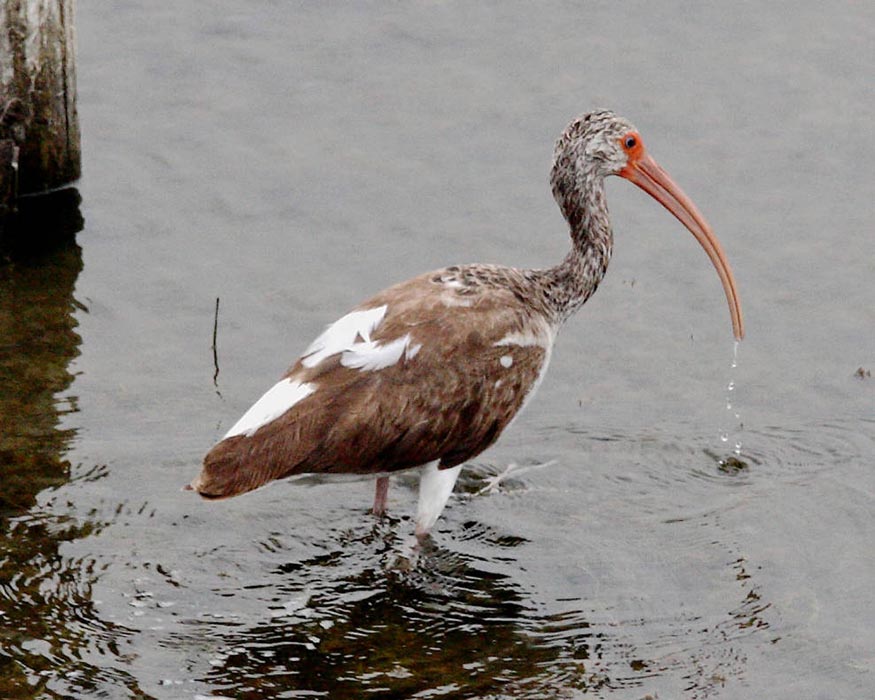
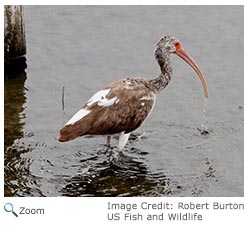 It has a long, down-curved, reddish-orange bill and a reddish-orange face. It legs are long and gray, except for during breeding season when they turn reddish-orange. Young white ibis are brown on their uppersides and white on their undersides and they have brown bills and legs. It has a long, down-curved, reddish-orange bill and a reddish-orange face. It legs are long and gray, except for during breeding season when they turn reddish-orange. Young white ibis are brown on their uppersides and white on their undersides and they have brown bills and legs.
Range
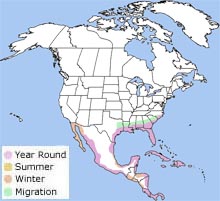
The white ibis is found on the Atlantic Coast from Virginia south to Florida and along the Gulf Coast west to Texas. It is also found in Mexico and Central America.
Habitat
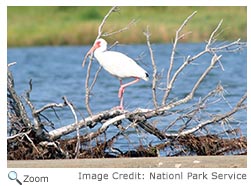 The white ibis lives in a variety of coastal freshwater, saltwater and brackish marshes, rice fields, mudflats, mangrove swamps and lagoons. The white ibis lives in a variety of coastal freshwater, saltwater and brackish marshes, rice fields, mudflats, mangrove swamps and lagoons.
|
|
Diet
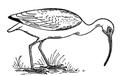
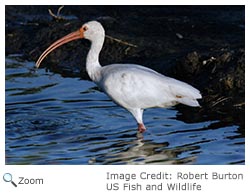 The white ibis wades in the water sweepings its head form side-to-side in search of food. It uses its long, curved bill to probe in the mud for
crabs and crayfish. It swallows its prey whole. It also forages for food on land, and it may also eat insects,
frogs, snails, marine worms, snakes, and small fish. Flocks of white ibis will move to different locations in search of food. Other wading birds often follow behind the white ibis and catch prey that has been disturbed by the probing ibis! The white ibis wades in the water sweepings its head form side-to-side in search of food. It uses its long, curved bill to probe in the mud for
crabs and crayfish. It swallows its prey whole. It also forages for food on land, and it may also eat insects,
frogs, snails, marine worms, snakes, and small fish. Flocks of white ibis will move to different locations in search of food. Other wading birds often follow behind the white ibis and catch prey that has been disturbed by the probing ibis!
Life Cycle
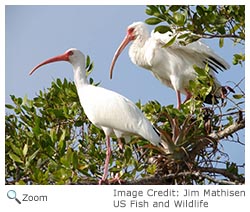 The white ibis breeds in large colonies that may include other wading birds. Males arrive at the breeding grounds first. The male preens and points its bill towards the sky to attract a mate. Both the male and female build the nest. The male brings sticks, reeds, leaves and other plant materials to the female who then constructs a platform nest in the crotch of a tree, in a shrub or sometimes on the ground. The female lays 2-5 eggs, and both the male and the female incubate them. The eggs hatch in about 21 days. Both parents feed the chicks regurgitated food. The chicks fledge when they are about six weeks old. The white ibis breeds in large colonies that may include other wading birds. Males arrive at the breeding grounds first. The male preens and points its bill towards the sky to attract a mate. Both the male and female build the nest. The male brings sticks, reeds, leaves and other plant materials to the female who then constructs a platform nest in the crotch of a tree, in a shrub or sometimes on the ground. The female lays 2-5 eggs, and both the male and the female incubate them. The eggs hatch in about 21 days. Both parents feed the chicks regurgitated food. The chicks fledge when they are about six weeks old.
Behavior
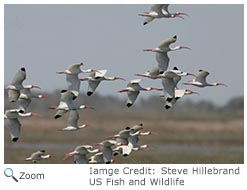 The white ibis nests and feeds in large groups. Nesting colonies may include thousands of birds. The white ibis will fly up to 15 miles a day in search of food. The white ibis nests and feeds in large groups. Nesting colonies may include thousands of birds. The white ibis will fly up to 15 miles a day in search of food.
|


 Characteristics